

VoIP Concurrent Calls: What Counts and How to Find Your Peak
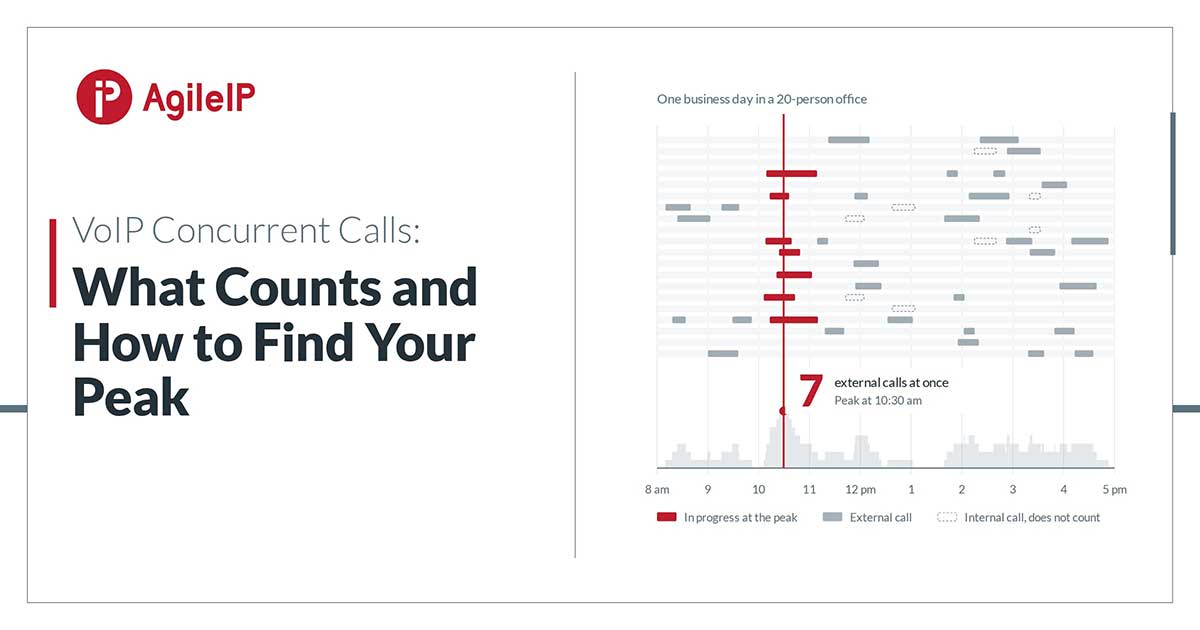
VOIP concurrent calls are the external calls a business has in progress at the same moment. On a phone system priced per line, that number sets the line count: one line carries one concurrent external call. Knowing what counts toward it, and when the peak happens, is how a business sizes its phone system.
What counts as a concurrent call
Every external call in progress counts, inbound or outbound. A receptionist answering a customer while a colleague calls a supplier makes two concurrent calls.
Callers on hold or waiting in a call queue count as well. They are connected to the phone system, so each one holds a line until the call ends, even before anyone picks up.
Internal calls do not count. A call from one desk to another, an intercom announcement, or a page stays inside the phone system and uses no line.
Calls that hold two lines
Some calls hold a line on each side. A call forwarded to a cell phone holds two lines: the inbound call and the outbound leg to the mobile. The same applies when find me / follow me reaches a mobile, and to a three-way call with two outside parties.
For a business that forwards calls to staff cell phones, these calls can shape the peak more than headcount does.
When every line is in use
When every line is in use, the next external caller gets a busy signal. That is why a line count is sized to the busiest moment of the day, not the average. A business that runs at four calls most of the afternoon but reaches nine when it opens needs lines for the nine.
How to find your peak
Call history is the most reliable source. Call detail on current carrier bills, or the call logs from the existing phone system, shows how many calls overlapped and when. Look at the busiest hour on the busiest days, not a typical morning, then add a small buffer.
Seasonal patterns matter too. A tax practice in April or a retailer in December runs well above its usual peak. The people who answer the main line are a good check: they know when every phone lights up at once.
Typical ranges
For most businesses, the line count is well below the headcount. A 20-person office might need 6 to 8 lines. A 100-person professional services firm might need 25 to 30. Call-heavy operations such as contact centres, healthcare clinics, and dispatch services run higher because more of their staff are on the phone at the same time.
With per-line pricing, the peak is also what drives cost, not the number of people on staff. For how per-line and per-user pricing compare, see VoIP Phone System Cost in Canada.
Changing the line count
On a hosted PBX, lines are configured in software. Adding lines for a new department, a new site, or a seasonal peak is a configuration change, not a hardware order, and lines can be reduced when the peak passes. AgileIP operates dedicated physical infrastructure with ample headroom. The number that matters is the one on the account, sized to the business’s peak.
Frequently asked questions
No. Only external calls count toward the line total. Calls between extensions, intercom announcements, and pages stay inside the phone system and use no line.
Yes. A caller on hold or waiting in a call queue is connected to the phone system and holds a line until the call ends. A line count sized to the peak includes those callers, not only the calls being answered.
Start with call detail on current carrier bills or the call logs from the existing phone system. Find the busiest hour on the busiest days, count the calls that overlapped, and add a small buffer. Check seasonal peaks separately.
Yes. On a hosted PBX, lines are configured in software, so the line count can rise for growth or a seasonal peak and come back down afterward. AgileIP service is month-to-month, so the line count follows the business, not a contract term.
YOU MIGHT BE INTERESTED IN:
We offer free consultations to assess your needs and help you make an educated choice.