

Business Phone Number vs. Personal Cell Phone: Do You Actually Need a Business Number?
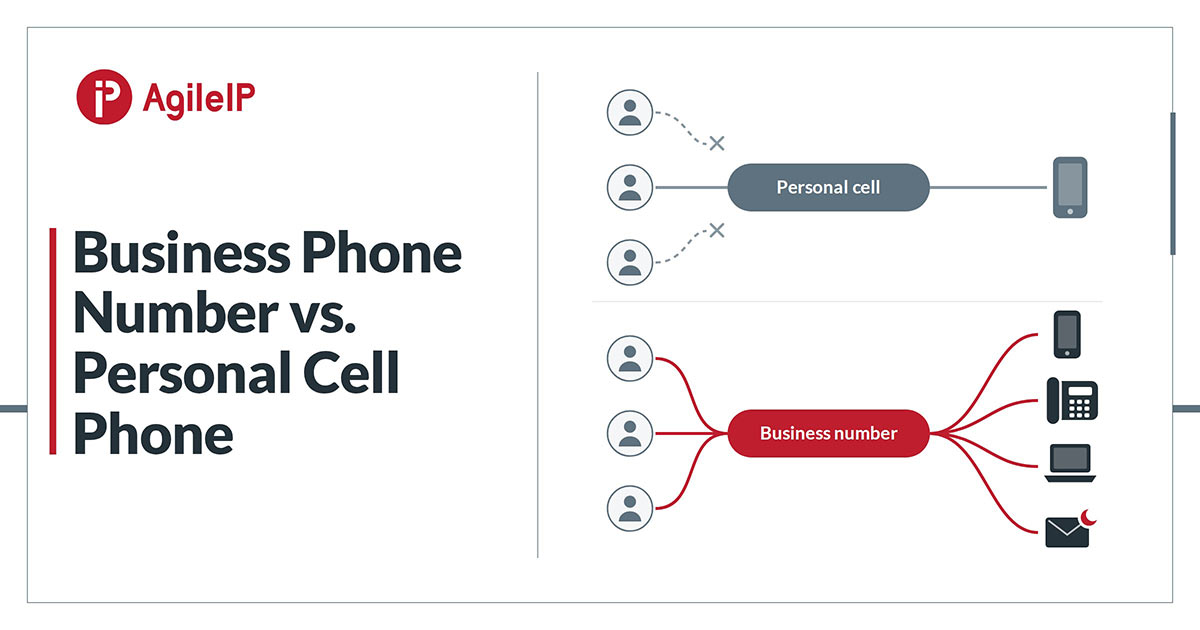
For a one-person business taking a handful of calls a day, a personal cell phone can be enough, and many businesses start exactly that way. The question is when it stops being enough. The answer usually arrives as a specific moment: the first hire, the first employee who leaves, the first customer who calls at 10 p.m. on a Saturday, the first week the owner is on vacation and the phone never stops. This guide compares a business phone number with a personal cell phone on the situations that actually come up, and explains how a business number can still ring on the same cell phone.
The number belongs to whoever owns the phone
When a salesperson, technician, or receptionist gives customers their personal cell number, every one of those customers now has a direct line to a person, not to the business. When that person leaves, the customers’ contact lists still point to a phone the business does not control. Some customers follow the person to their next employer without ever deciding to; they simply call the number they have.
A business phone number reverses this. Customers call the business, the business routes the call to whoever handles it today, and when staff change, nothing changes for the customer. The number is an asset of the business, on its signage, its invoices, and its listings, and it stays put.
A personal number, once shared, is personal for good
A cell number given out for business ends up on estimates, vehicle doors, business cards, online listings, and in hundreds of other people’s phones. It cannot be taken back. Years later, a former customer or a supplier’s automated system still calls it, at any hour, long after the owner wanted the phone to be personal again.
A business number keeps the personal one private from the first day. It can also be handed to a successor, which is not true of a number on someone’s personal cell plan.
One person, one phone
A personal cell phone is a single line to a single person. When the owner is on a call, the next caller gets voicemail. When two people share the work, they cannot share the phone. There is no practical way to send a caller to a colleague, put two callers in order, or have a message land in an inbox where anyone can pick it up.
A business number sits in front of a phone system that does these things: a ring group that rings two or three phones at once so the first free person answers, an auto attendant that greets the caller and routes them, voicemail delivered by email so a message is heard within minutes rather than at the end of the day. On AgileIP, these are included with every line. The guide to why small businesses miss calls walks through each one.
Customers do not respect business hours on a cell phone
A cell number invites calls at all hours, and callers who reach a personal voicemail at 9 p.m. do not know whether the business is closed or ignoring them. Many will not leave a message.
A business number has a schedule. During business hours, calls ring the team. Outside them, the caller hears the hours, is offered a voicemail that arrives by email, or reaches an on-call person if the business chooses. The owner’s evening stays quiet, and callers still have a way to reach the business.
How the business reads to a first-time caller
The first call is often the first impression. A local business number answered with a business greeting, or an auto attendant that names the business and offers a short menu, reads as an established operation. A cell number that goes to a personal voicemail greeting reads as a side project, whether or not that is fair. For a caller comparing three contractors or three clinics, that impression can decide the call.
Growth is easier to start with than to migrate to
The first hire is the moment most owners discover the problem. Moving customers from a personal cell number to a business number after the fact means reprinting materials, updating listings, and hoping customers change the number they have saved. Starting with a business number means the first hire, the second location, and the eventual handover are routing changes rather than campaigns.
A business number can still ring your cell phone
Getting a business number does not mean carrying a second phone or sitting at a desk. Two options keep the cell phone in the picture while the personal number stays private:
- A standalone Single Number Reach number. For a business with no phone system yet, Single Number Reach is a local business number that rings one or several cell phones at the same time, with a single voicemail box behind it. It is offered as a standalone service, so a one-person or two-person business can have a business number without buying a phone system. Calls that come through it show a caller ID prefix, so a business call is recognizable before it is answered; calls returned from the cell phone’s own dialer show the personal number.
- A softphone app on a phone system. For a business with a hosted VoIP phone system, the AgileIP softphone puts the business line on the cell phone: incoming calls to the business number ring the app, and outgoing calls from the app show the business number as caller ID. It runs on Android, iOS, Mac, and PC, works across Canada, and is available as an add-on to any AgileIP line.
The full comparison of forwarding, find me / follow me, the softphone, and Single Number Reach is in the guide to ringing a business phone number on a cell phone.
When a personal cell phone is enough
A business run by one person, with no plans to hire, taking few enough calls that none are missed, and comfortable with customers having the personal number indefinitely, can run on a cell phone. Many do. The moment any of those conditions changes, the business number is the fix, and it is easier to put in place before the change than after.
Some providers, like AgileIP, offer both routes: a standalone Single Number Reach number for the business that only needs one number ringing a few phones, and a hosted phone system, month-to-month with no multi-year lock-in and no penalty for leaving, for the business that has outgrown it. A quote request puts a line count and a configuration to either one, with no obligation attached.
Frequently asked questions
No. A business number can ring a cell phone through a standalone Single Number Reach service or through a softphone app on a hosted phone system. A desk phone is an option, not a requirement.
Yes. A Single Number Reach number rings several cell phones at once, and on a phone system a ring group does the same for desk phones and softphones. The caller dials one number; whoever is free answers. Single Number Reach handles two calls at the same time, and more simultaneous calls are available as an add-on.
It stays with the business. A business number is not tied to an office address, and Canadian telecom rules make the right to move a number to a new provider unconditional. The mechanics are covered in the guide to porting a business phone number.
Yes, and that is the point. With a softphone app, business calls come in and go out on the business number while personal calls stay on the personal one, even on the same phone. With Single Number Reach, incoming business calls arrive through the business number with a caller ID prefix, but calls returned from the cell phone’s own dialer show the personal number.
YOU MIGHT BE INTERESTED IN:
We offer free consultations to assess your needs and help you make an educated choice.